
Home / Services / Speech & Language Therapy
Speech Therapy and Speech Testing in Pune
From a toddler who isn’t talking yet to an adult recovering speech after a stroke, the speech-language specialists at Prism Hearing, Speech and Balance assess, explain and treat. Every plan starts with a proper assessment, followed by patient, practical therapy for children and adults in Viman Nagar.
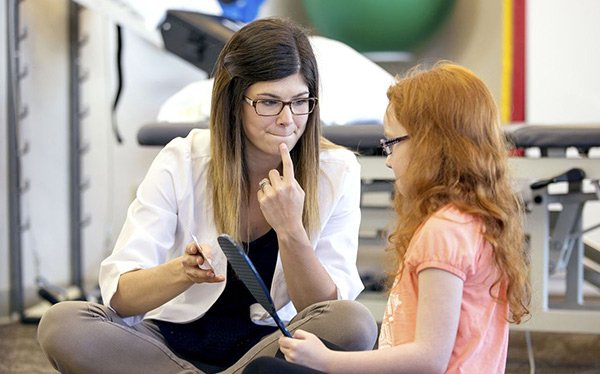
Communication is at the heart of everything
Difficulty speaking, understanding or swallowing can affect confidence, schooling, work and relationships at any age. With the right assessment and consistent therapy, real progress is possible.
Speech and language therapy helps people understand others, put their thoughts into words, say sounds clearly, speak more fluently and swallow more safely.
We begin with a thorough speech-language assessment, share clear findings and goals, then work with you (and, for children, with parents) through structured, encouraging sessions.
How we help
Speech, language & swallowing care
Children’s speech & language
Assessment and therapy for delayed speech, unclear articulation, limited vocabulary, language delay and fluency concerns such as stammering, with parent guidance for home practice.
Adult speech & language
Support for communication difficulties after a stroke or neurological condition, including language (aphasia) and clarity of speech, to help you reconnect with the people around you.
Dysphagia (swallowing)
Assessment and management of swallowing difficulties, with safe-swallow strategies and guidance for patients and families.
Hearing-linked speech support
Because hearing and speech are closely connected, we coordinate speech therapy with hearing assessment and hearing-aid fitting where needed.
When to seek help
Consider an assessment if…
- A child isn’t meeting speech milestones, or is hard to understand for their age
- A child repeats sounds, blocks or stammers when speaking
- A child struggles to follow instructions or to put words together into sentences
- An adult has trouble finding words or speaking clearly after a stroke or injury
- Coughing, choking or difficulty swallowing food or liquids
- Someone can hear that people are talking, but often mishears the words
Your visit
How speech therapy works, step by step
Therapy always starts with an assessment, so the plan fits the person rather than a label.
- A conversation first. We ask about your concerns, health and daily life. For a child, that includes development so far and anything nursery or school has noticed. Bring any earlier reports.
- The assessment. Young children are assessed mostly through play, pictures and toys. Older children and adults talk, listen, name pictures and follow instructions. Where swallowing is the concern, we look at how food and drink are managed.
- A hearing check where needed. If hearing could be part of the picture, we can test it in the same clinic.
- Findings, goals and a plan. We explain what we found in plain language and agree clear goals with you.
- Therapy and practice at home. Children learn through play, adults through everyday tasks. Short, regular practice at home helps progress carry over into daily life.
- Regular reviews. We track progress and adjust the goals as things change.
When the goals are met, we agree how to keep skills going at home.
A plain guide
Speech testing and speech audiometry, explained
Speech testing can mean two things, and we offer both: a speech and language assessment of how a person speaks and understands, and speech audiometry, a hearing test of how well you hear and understand words. When a child’s speech is slow to develop, hearing is usually checked early, because undiagnosed hearing loss can cause speech delay. For babies, the first check is a newborn hearing screening.
What is a speech audiometry test?
You listen to words through headphones at different loudness levels and repeat them, or point to pictures. It shows how clearly you understand speech, which tones alone can’t fully tell us, and it guides the choice and fine-tuning of hearing aids. It is usually done with pure tone audiometry, the test with beeps.
The speech audiometry threshold
The speech reception threshold, sometimes called the speech audiometry threshold, is the softest level at which you can hear and repeat simple, familiar words.
Speech discrimination and the speech audiogram
The word recognition score, also called the speech discrimination score, is the share of words you repeat correctly when speech is comfortably loud. It measures clarity rather than loudness. A speech audiogram records both results for each ear, usually alongside your pure tone audiogram, and the audiologist explains them in plain language.
The speech banana on an audiogram
Plotted on an audiogram, the sounds of everyday speech fall in a curved band shaped a little like a banana. Deep sounds such as “m” and “oo” sit at the low-pitch end, and softer, high-pitched sounds such as “s”, “f” and “th” at the other. Where your hearing falls below part of the banana, those sounds are easy to miss, so speech can seem loud enough but unclear. It is a teaching picture, not a diagnosis: only a full hearing test shows what is happening in your ears.
See a doctor promptly if
- Hearing drops suddenly, or a new hearing loss appears in one ear.
- There is ear pain, discharge, or dizziness with a change in hearing.
- Hearing or speech changes after a head injury.
- A child stops using words or skills they had before.
- Swallowing problems come with choking, chest infections or weight loss.
See a doctor or an ENT specialist promptly for these. If speech suddenly becomes slurred, or the face droops or an arm or leg is weak, go to a hospital emergency department now: these can be signs of a stroke. Read more about sudden hearing loss.
Questions
Speech therapy FAQs
What is the 3:1 rule in speech therapy?
Is speech therapy costly?
What is a normal speech discrimination score?
At what age should my child start speech therapy?
Do you check hearing as part of a speech assessment?
How long does speech therapy take?
Help finding the right words
Book a speech-language assessment in Viman Nagar for your child or yourself, and let’s make a plan together.