
Home / Services / Hearing Tests
Hearing and Audiometry Tests in Pune
Better hearing starts with an accurate diagnosis. At Prism Hearing, Speech and Balance in Viman Nagar, we carry out the full range of diagnostic hearing tests for all ages, from a standard audiometry test for adults to gentle tests for newborns. If you go on to choose a hearing aid with us, your consultation, audiometry and video otoscopy are included free.
Why a proper hearing test matters
Hearing loss usually creeps in slowly, so it’s easy to miss until conversations and phone calls become hard work. A proper diagnostic hearing test, which audiologists call an audiometric examination, does more than tell you if you have a hearing loss. It shows its type, degree and pattern, and that is what makes a hearing aid sound clear rather than merely loud.
Our audiologists explain your results in plain language and recommend only what you actually need, whether that is a hearing aid, a doctor’s opinion or simply peace of mind.
When to get tested
Signs it’s time for a hearing check
- You often ask people to repeat themselves
- The TV or phone volume keeps creeping up
- Conversations are hard in noisy places
- People seem to mumble, especially women and children
- You notice ringing or buzzing in the ears
- A child has delayed speech or doesn’t respond to sound
- You work around loud noise, or have a family history of hearing loss
Hearing that fades with age usually starts with the high pitches, so speech gets less clear before it gets quieter. Our guide to hearing loss with age explains the pattern and what helps. Our hearing problems library covers other common changes too.
What to expect on the day
A relaxed, painless visit of about 30 to 45 minutes.
The core test, explained
Pure tone audiometry: how an audiometry test works
Pure tone audiometry, usually shortened to PTA, is the standard hearing test and the heart of every audiometry examination. If a doctor has asked you to get a PTA test or a pure audiometry test, this is the one. It finds the softest sound you can hear at each pitch, in each ear, and plots the results on a chart called an audiogram.
How a PTA test is done
You wear headphones in a quiet room. The audiometer plays short tones, from low pitches to high, and you press a button or raise your hand whenever you hear one, however faint. For each pitch, the audiologist finds the quietest level you can just hear, called your threshold. The test is then repeated with a small vibrating pad behind the ear, which sends sound straight to the inner ear, and comparing the two shows where a hearing loss comes from. A PTA audiometry test is painless.
Reading your audiogram
Pitch runs from low on the left to high on the right, and loudness from very soft at the top to loud at the bottom. The right ear is usually marked “O” and the left “X”. The lower the marks sit, the louder a sound had to be before you heard it.
What the results mean
Audiologists describe hearing by your average threshold, in decibels of hearing level (dB HL). As a general guide:
| Average threshold (dB HL) | Usually described as |
|---|---|
| 0 to 25 (adults), 0 to 15 (infants) | Normal hearing |
| 26 to 40 | Mild hearing loss |
| 41 to 55 | Moderate hearing loss |
| 56 to 70 | Moderately severe hearing loss |
| 71 to 90 | Severe hearing loss |
| 91 and above | Profound hearing loss |
The shape matters too. A dip at the high pitches, common with age and noise, makes speech unclear rather than quiet. A gap between the headphone and vibrating pad results points to the outer or middle ear, for example wax or fluid, causes that are more often treatable by a doctor. When both are low together, the loss is usually in the inner ear, the kind hearing aids most often help. These are general descriptions, not a diagnosis: your audiologist reads your audiogram alongside your history and your other tests.
Our diagnostic tests
Beyond PTA: the other tests in an audiometric examination
We choose the right test, or combination, for your symptoms and age. Most adults need only some of these.
Video otoscopy
A small camera shows your ear canal and eardrum on a screen. It comes first, because wax or a damaged eardrum can affect the other tests and may need a doctor.
Speech audiometry
Measures how well you understand words, not just tones: the softest level at which you can repeat words, and how many you catch at a comfortable volume. It guides the choice and fine-tuning of a hearing aid.
Tympanometry and impedance audiometry
Checks how your eardrum moves as the air pressure changes gently. A peaked curve (type A) is usual, a flat one (type B) often means fluid and a shifted one (type C) negative pressure. It includes acoustic reflexes, 1000 Hz tympanometry for infants and Eustachian tube tests, and often explains blocked or muffled hearing.
Otoacoustic emissions (OAE)
A soft probe plays quiet sounds and listens for the faint echo a healthy inner ear sends back. No clear echo means more testing, not a certain hearing loss. We use TEOAE and DPOAE, and OAE is the usual first test in newborn hearing screening.
Brainstem evoked response audiometry (BERA)
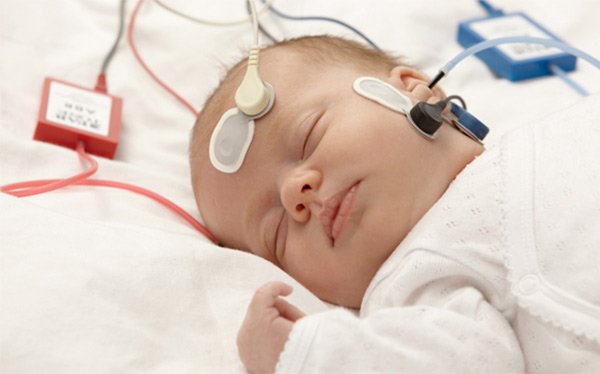
Also called ABR. Soft sensors on the skin record how the hearing nerve and brainstem respond to sound, with no response needed from you. It suits babies and anyone who can’t take a standard test, and is used to confirm screening results and estimate hearing levels.
Electrocochleography (ECochG)
Records electrical activity from the cochlea and hearing nerve. It’s mainly used when fluctuating hearing, ear fullness and vertigo raise the question of Ménière’s disease, as one piece of evidence for your ENT specialist.
Balance tests such as VEMP and VNG are covered under balance and vertigo testing.
See a doctor or ENT specialist promptly if
- Your hearing dropped suddenly, in one ear or both.
- Hearing loss in one ear is new, or one ear has become much worse than the other.
- There is ear pain, bleeding or discharge.
- Your hearing changed along with dizziness, or after a head injury.
These need a medical opinion quickly, not a routine appointment. Read our guides to sudden hearing loss and hearing loss in one ear. If a change in hearing comes with a drooping face, weakness, slurred speech or a severe headache, go to a hospital emergency department now.
Booking your test
An ear test near you in Viman Nagar
Our clinic is at Ganapati Chowk in Viman Nagar, Pune, open all days from 9:30 am to 7:30 pm. To book an ear test, call, message us on WhatsApp or use the contact form, and tell us what’s worrying you so we can plan the right tests. If travelling is hard, for an elderly parent for example, ask about an audiometry test at home. If a specialised test needs the clinic, we’ll tell you.
After your test
Your audiologist goes through your audiogram with you. What happens next depends on the results:
- Normal hearing. Nothing more is needed, though it’s worth testing again if anything changes.
- A hearing loss that hearing aids can help. We explain your options across six global brands, and you can try a hearing aid with a free home trial before you decide. See our hearing aids page.
- A result that needs a doctor, such as a middle-ear problem or a sudden change. We’ll explain why and point you to an ENT specialist, with your results in hand.
- A child’s speech or language concern. Our speech-language team offers speech testing and therapy alongside the hearing tests.
Questions
Hearing test FAQs
What is an ear test?
What is a normal audiometry result?
What are the early signs of hearing loss?
How long does a hearing test take?
Does a hearing test cost anything?
Can you test babies and young children?
Book your hearing test today
Find out exactly how you’re hearing, and what, if anything, to do about it. Visit us in Viman Nagar or ask for a home test.